



Emergency Commercial Glass Repair in NJ: What to Do, What to Expect, and Who to Call
Introduction: A Broken Commercial Window Is a Business Emergency — Treat It Like One
A smashed storefront. An eight-story-high curtain wall panel that’s broken. A damaged ground-level window, showing the inside of the building. A storm-cracked insulating glass unit in an occupied apartment building. No matter the reason, broken commercial glass isn’t simply an aesthetic problem.
It’s a security risk. It makes the building vulnerable to the elements. It may even be a liability issue. It could also be a code compliance issue if there’s fire-resistant glass involved. And when dealing with an occupied residential building, it raises habitability issues for the people living in that building beyond the broken glass.
Every hour that a broken commercial window goes unaddressed — whether that means an emergency board-up, an interim glazing repair, or immediate glass replacement — risks are being added. The weather gets into the building. The building becomes more insecure. If it’s a commercial retail business, then the thieves know it’s a weak spot. If it’s a multifamily apartment building, people are becoming uncomfortable and possibly even dangerous.
AAWD Inc. has been the trusted commercial window repair company in NJ, NY, and CT since 1994. Here we’ll look at what you need to do immediately if commercial glass breaks, what emergency commercial glass repair entails, how to deal with your insurance company, and how to find the right emergency glass repair service quickly.
For emergency commercial glass repair in NJ, NY, or CT — call AAWD Inc. at 800-495-8175.
Question: What Is Emergency Commercial Glass Repair?
Answer: Emergency commercial glass repair refers to an urgent reaction to any broken, smashed, or damaged glass used in commercial doors and windows such as storefront glass, curtain wall glass panels, window wall glass, commercial door glass, and insulating glass unit in multistory or office buildings. This repair consists of an urgent tarping or taping of the damaged area first before replacing it with new glass that is supposed to be replaced with. AAWD Inc. offers emergency commercial glass repair in NJ, NY, and CT. Contact 800-495-8175.
Commercial Glass and Why it Breaks
Commercial glass refers to a wide variety of glazing systems used in commercial, multifamily, and institutional buildings – with different properties, different failure modes, and different replacement needs.
The first step in repairing broken glass in your building involves knowing what kind of glass you have:
Annealed Glass
A standard float glass without any heat treatment. Breaks in big, sharp pieces that pose a serious danger. Not commonly used in new commercial buildings since of the breakage hazard. In case of breaking of annealed glass in an old building, it should be replaced with tempered or laminated glass suitable for the specific application.
Tempered (Safety) Glass
Heat-treated glass that is four times stronger than annealed glass. If tempered glass breaks, it breaks in small, relatively harmless cubes, not sharp shards. Used as a requirement for a number of commercial and residential projects such as sliding doors, entry doors, and windows placed at floor level. When a tempered glass unit breaks, it provides full-opening failure requiring immediate board-up or temporary protection.
Laminated Glass
Glass units with interlayer (PVB or SGP) glued together. If the glass unit breaks, it stays in the frame, not falling out since the interlayer keeps it from falling down. Both a safety and security feature of laminated glass. Laminated glass is required for hurricane impact rating, overhead glazing, and a number of safety code applications.
Insulating Glass Units (IGUs)
Double or triple glass units that are sealed in order to provide energy efficiency in commercial and residential windows. Failure of IGU occurs either due to external breakage (thermal stress or impact) or fogging caused by the inner seal failure. Both types of failures mean that the sealed unit should be replaced – no in situ repair is possible.
Fire-Rated Glass
Specialty glass products (wired glass, fire-rated ceramic glass, intumescent fire-protective glass) used in the fire-rated assemblies. The replacement of the fire-rated glass should be carried out using fire-rated glass that provides the same rating as the original product. Using non-rated glass as the temporary solution in fire-rated opening results in life-safety code violation.
Curtain Wall/Window Wall Glass
Glass panels in the curtain wall/window wall system. Replacement involves using correct glass size, IGU configuration and type according to the original specification and structural requirements of the system. Curtain wall glass replacement on the upper floors requires use of access equipment.
Reasons for Emergency Commercial Glass Failure
Impact
The most frequent reason for emergency commercial glass calls. An example of impact damage would be a hit on the glass storefront by a vehicle, vandalism, rock or projectile damage, construction debris, and unintended collisions. Glass, when subjected to an impact load, will usually shatter into pieces; however, laminated glass will only fracture and stay in place.
Storm
Strong winds, hail, and wind-borne debris are some of the primary reasons why commercial glass windows fail during a NJ storm event. Large-scale curtain wall systems and unprotected storefront glass are particularly susceptible to wind-blown debris. Often, storm damage results in multiple glass failures happening simultaneously in the building.
Thermal Stress Crack
The cracking of glass caused by thermal stresses that arise as a result of a large difference in temperature across the glass panel. Thermal cracking is most commonly seen in partially shaded glass where the temperatures of different parts of the glass vary significantly. Typically, thermal cracks look like a single curving crack starting from the edge of the glass panel – while impact cracks show a radiating pattern around the point of the impact.
Spontaneous Breaking of Tempered Glass
A rather uncommon occurrence. On rare occasions, tempered glass may spontaneously crack because of nickel sulfide (NiS) inclusions in glass, which can result in spontaneous breaking of heat strengthened or fully tempered glass sometime after the installation. It is more common for curtain wall glass exposed to thermal cycling. Typically, such breaks look like a standard tempered glass crack pattern without any apparent reason.
Seal Failure in IGU
A seal in an insulated glass unit can fail due to age, manufacturing flaws, improper installation, or damage to the edge of the IGU. Once the seal fails, water can get between two panes and cause fogging, which cannot be cleaned from the inside of the glass. This problem is not an emergency per se, but it requires the replacement of the glass unit anyway.
Immediate Actions When Breaking Of Commercial Glass Occurs: The Emergency Response Procedure
- Assess the safety of the scene. Before you go near the broken glass, make sure that the area where it happened is safe — there is no threat from the impact, no danger from traffic to the area of the broken window and there is no falling of glass from above. Do not let anyone enter the area of the broken glass.
- Photograph the scene. Take photos of the damage done — the whole opening, broken glass lying in the area and broken pieces in the frame and any other signs of the reasons of this damage — the traces of a car crash, graffiti, traces of a storm. These pictures will help your insurance and your contractor to assess the damage.
- Mark off the damaged area. Make the area of broken glass inaccessible till the opening is repaired. In case of the retail space, it means that you need to block it from public access.
- Contact your property insurance company. Report the accident to your insurance company as soon as you address the safety of the area. They will assign a claim number to your case.
- Call AAWD Inc. at 800-495-8175. Describe the type of glass, dimensions and location of the opening, kind of the damage done to your glass.
- Board up or install the temporary glazing while permanent repair is being organized. Contact AAWD and ask for advice about appropriate temporary protection of your window.
- Collect all the documents for the insurance claim. After the boarding up of your opening is finished and the situation is out of emergency, you need to gather all the necessary documents — photos, a written report about the reason and the circumstances of the damage, an estimate from the contractor for the replacement of the glass and a written statement of witnesses if the damage was done by the third party.
Replacement Commercial Glass on an Emergency Basis – What’s Involved?
Glass Assessment and Specification
Before glass can be ordered, there needs to be an assessment of the opening and determination of the proper glass replacement product. This includes:
- Glass measurement – net glass size, not rough opening size
- Glass type identification – is the glass product tempered, laminated, IGU, or fire-rated? Does this glass meet the codes for this particular opening?
- Frame assessment – can the existing frame be re-used, or has the glass impact or exposure to the elements damaged the frame and hardware?
- Are there special requirements for the opening such as fire-rating, impact resistance, or sound transmission?
Glass Order and Delivery
Commercial glass is a manufactured item – it is fabricated to the exact dimensions of the opening and the specifications called out for the glass itself. Lead times for commercial IGU fabrication in the New Jersey market vary from a few days to several weeks based on size and specifications. Emergency glass orders can possibly be expedited through commercial glass fabricators with larger inventory of raw materials, but immediate custom glass fabrication is rarely possible. This is why board-up or temporary glazing is necessary for emergency repair response.
Installation
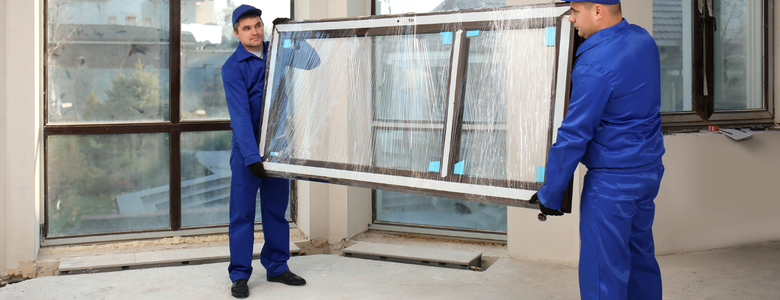
- Installation of commercial glass involves cleaning the frame, installation of the replacement glass unit with appropriate setting blocks and clearance, proper installation of the compression gaskets or glazing tape, and exterior sealant application where needed in the system design.
- Access to upper floor openings involves swing stage, aerial lift, or scaffolding which must be planned in advance.
Insuring Your Emergency Commercial Glass Repair
Glass Replacement Insurance Claims
Commercial property insurance covers glass damage that results from specified perils, such as vandalism, storm, auto, and other sudden accidental occurrences. Knowledge about the insurance claim process will ensure a much easier experience regarding glass replacement.
Take Pictures Before Any Cleanup
The most common mistake made during an insurance claim process is cleanup of the broken glass before sufficient evidence has been gathered. The insurance adjuster will need pictures of the damage before it is cleaned up or removed. It is important to photograph everything before removing or cleaning any glass.
Determine the Cause of Loss
The insurance company will ask you to identify the cause of the loss or the specific event that led to breaking of the glass. Give as specific description as possible such as vandalism (give the police report number if there is one); auto collision; hail or wind storm (date and data from the weather service); or if the cause of the loss is not known. Thermal stress and spontaneous breaking of tempered glass are usually not covered in sudden accidental occurrence.
Get a Written Estimate from a Professional Contractor
It is likely that your insurance company will request a professional estimate for glass repair work from a licensed commercial glazing contractor. This estimate will include types of glass used, sizes, and installation. AAWD Inc. gives a written estimate for insurance claims along with consultation on emergency repair.
Know Your Deductible and Coverage Limits
Commercial glass insurance can be included under a separate deductible different from the regular property deductible. Look at your policy before filing any claim – some small glass repairs may turn out to be cheaper than the deductible amount and hence not worthy of filing a claim, but large replacement of curtain walls or glass storm damage is definitely worthwhile.
Why the Right Glazier is Key to Emergency Commercial Glass Repair
- The sense of urgency that accompanies an emergency glass situation often leads to a property owner reaching out to any glazier that they can contact right away. This reaction is understandable — but it does come with certain risks.
- Commercial glass replacement and repair cannot be approached like residential window repairs and replacements. Different types of glass products, different installation techniques, codes and accessibility issues involved in commercial glass projects mean that it is essential to choose a glazier with adequate commercial glazing experience. Choosing the wrong glass product, the wrong technique and not meeting code requirements for that particular opening could end up being more costly than the initial damage.
- Incorrect glass selection: replacing a fire rated glass opening with a regular tempered glass window could lead to life safety code violations and insurance coverage issues
- Inadequate specification: replacing a high performing Low-E IGU with one that does not meet the standards might be considered a code violation for replacement fenestration in NJ
- Poor installation: curtain wall panel replacement which is not correctly sealed or mounted may result in failure of the panel due to wind loads, resulting in a more severe problem than initial damage
- With 30+ years of experience in commercial glazing in NJ, NY, and CT, AAWD Inc. has the technical knowledge needed to specify and install the right replacement product
Some Typical Emergencies in Commercial Glass Repairs in NJ
Retail Storefront Breakage
The glass in the storefront of a retail tenant has been broken by a car backing up into it at 9 PM. The building owner wants to get the opening fixed by morning. AAWD helps with immediate board up suggestions and gets the insurance claim specification documented and schedules replacement of tempered glass.
Vandalism in a Multi-family Building
The ground floor apartment windows are broken overnight due to vandalism. The residents have trouble sleeping in the apartments that have no protection against break-in. AAWD arranges for the immediate glazing so that the tenants can have their homes back while preparing the permanent replacement IGUs.
Damage to Curtain Wall Panels Caused by a Storm
Two curtain wall panels have been cracked on the 7th floor of a commercial office building by the impact of storm-related debris. AAWD team assesses the curtain wall panels, identifies the required replacement IGUs and arranges the swing stage access and installation of these panels.
Spontaneous Breakage of Tempered Glass
A curtain wall panel on the 12th floor breaks down spontaneously over the weekend. The building management contacts AAWD on Monday morning as soon as they discover that there is no glass left but the opening is contained by the curtain wall frame. AAWD arranges swing stage access, replaces the glass and fixes the problem.
Comparison: Emergency Glass Repair Options
Response Option
Timeline
Security
Transparency
Best For
Board-up (plywood)
Hours
Good
None
Immediate overnight security
Temporary glazing (acrylic/polycarbonate)
1–2 days
Good
Partial
Occupied residential, high-visibility retail
Permanent glass replacement
Days to weeks
Full
Full
Final resolution — all scenarios
Insurance claim + contractor coordination
Ongoing
Via above
Via above
Most commercial damage events
Frequently Asked Questions about Emergency Commercial Glass Repair
What should I do right away after breaking commercial glass?
Ensure the safety of the situation, take photos of the damage, clean up, secure the area, contact your insurance company and contact AAWD Inc. at 800-495-8175 for advice regarding emergency glass repair.
How quickly will the broken commercial glass be replaced?
Within hours it will be possible to arrange emergency board-up. Temporary glazing requires one-two days. Glass replacement depends on glass type – standard specification IGUs can be ordered within a few days, larger sizes can require more time to be manufactured.
Is my commercial property insurance covering glass breakage?
Commercial property insurance usually covers glass breakage in case of a covered peril (storm, vandalism, impact by a vehicle). Thermal stresses and spontaneous tempered glass breakage are not covered. Check your insurance policy regarding glass coverage and deductible before claiming.
What information is needed to arrange emergency commercial glass repair call from AAWD?
Type of building, its address, floor where glass breakage occurred, glass type (if known), dimensions of the opening and cause of the damage (if known). Make a call to 800-495-8175 and AAWD specialists will assist you in providing other information.
Can fire-rated glass opening be temporarily repaired using non-fire-rated glass?
No. Glass opening requiring fire-rated glass should be installed with glass of at least the same rating as the original. Installation of non-rated glass opening in place of a fire-rated glass opening violates the life safety code. AAWD provides the right replacement fire-rated glass product for fire rated opening emergencies.
What is the difference between temper glass and laminated glass replacements?
When temper glass is broken, it shatters into cubes – therefore, the opening should be cleaned up fully and protected until new glass is ordered. Laminated glass is held together when broken since the interlayer keeps the shards – therefore, the broken glass unit provides at least some protection.
Introduction: A Broken Commercial Window Is a Business Emergency — Treat It Like One
A smashed storefront. An eight-story-high curtain wall panel that’s broken. A damaged ground-level window, showing the inside of the building. A storm-cracked insulating glass unit in an occupied apartment building. No matter the reason, broken commercial glass isn’t simply an aesthetic problem.
It’s a security risk. It makes the building vulnerable to the elements. It may even be a liability issue. It could also be a code compliance issue if there’s fire-resistant glass involved. And when dealing with an occupied residential building, it raises habitability issues for the people living in that building beyond the broken glass.
Every hour that a broken commercial window goes unaddressed — whether that means an emergency board-up, an interim glazing repair, or immediate glass replacement — risks are being added. The weather gets into the building. The building becomes more insecure. If it’s a commercial retail business, then the thieves know it’s a weak spot. If it’s a multifamily apartment building, people are becoming uncomfortable and possibly even dangerous.
AAWD Inc. has been the trusted commercial window repair company in NJ, NY, and CT since 1994. Here we’ll look at what you need to do immediately if commercial glass breaks, what emergency commercial glass repair entails, how to deal with your insurance company, and how to find the right emergency glass repair service quickly.
For emergency commercial glass repair in NJ, NY, or CT — call AAWD Inc. at 800-495-8175.
Question: What Is Emergency Commercial Glass Repair?
Answer: Emergency commercial glass repair refers to an urgent reaction to any broken, smashed, or damaged glass used in commercial doors and windows such as storefront glass, curtain wall glass panels, window wall glass, commercial door glass, and insulating glass unit in multistory or office buildings. This repair consists of an urgent tarping or taping of the damaged area first before replacing it with new glass that is supposed to be replaced with. AAWD Inc. offers emergency commercial glass repair in NJ, NY, and CT. Contact 800-495-8175.
Commercial Glass and Why it Breaks
Commercial glass refers to a wide variety of glazing systems used in commercial, multifamily, and institutional buildings – with different properties, different failure modes, and different replacement needs.
The first step in repairing broken glass in your building involves knowing what kind of glass you have:
Annealed Glass
A standard float glass without any heat treatment. Breaks in big, sharp pieces that pose a serious danger. Not commonly used in new commercial buildings since of the breakage hazard. In case of breaking of annealed glass in an old building, it should be replaced with tempered or laminated glass suitable for the specific application.
Tempered (Safety) Glass
Heat-treated glass that is four times stronger than annealed glass. If tempered glass breaks, it breaks in small, relatively harmless cubes, not sharp shards. Used as a requirement for a number of commercial and residential projects such as sliding doors, entry doors, and windows placed at floor level. When a tempered glass unit breaks, it provides full-opening failure requiring immediate board-up or temporary protection.
Laminated Glass
Glass units with interlayer (PVB or SGP) glued together. If the glass unit breaks, it stays in the frame, not falling out since the interlayer keeps it from falling down. Both a safety and security feature of laminated glass. Laminated glass is required for hurricane impact rating, overhead glazing, and a number of safety code applications.
Insulating Glass Units (IGUs)
Double or triple glass units that are sealed in order to provide energy efficiency in commercial and residential windows. Failure of IGU occurs either due to external breakage (thermal stress or impact) or fogging caused by the inner seal failure. Both types of failures mean that the sealed unit should be replaced – no in situ repair is possible.
Fire-Rated Glass
Specialty glass products (wired glass, fire-rated ceramic glass, intumescent fire-protective glass) used in the fire-rated assemblies. The replacement of the fire-rated glass should be carried out using fire-rated glass that provides the same rating as the original product. Using non-rated glass as the temporary solution in fire-rated opening results in life-safety code violation.
Curtain Wall/Window Wall Glass
Glass panels in the curtain wall/window wall system. Replacement involves using correct glass size, IGU configuration and type according to the original specification and structural requirements of the system. Curtain wall glass replacement on the upper floors requires use of access equipment.
Reasons for Emergency Commercial Glass Failure
Impact
The most frequent reason for emergency commercial glass calls. An example of impact damage would be a hit on the glass storefront by a vehicle, vandalism, rock or projectile damage, construction debris, and unintended collisions. Glass, when subjected to an impact load, will usually shatter into pieces; however, laminated glass will only fracture and stay in place.
Storm
Strong winds, hail, and wind-borne debris are some of the primary reasons why commercial glass windows fail during a NJ storm event. Large-scale curtain wall systems and unprotected storefront glass are particularly susceptible to wind-blown debris. Often, storm damage results in multiple glass failures happening simultaneously in the building.
Thermal Stress Crack
The cracking of glass caused by thermal stresses that arise as a result of a large difference in temperature across the glass panel. Thermal cracking is most commonly seen in partially shaded glass where the temperatures of different parts of the glass vary significantly. Typically, thermal cracks look like a single curving crack starting from the edge of the glass panel – while impact cracks show a radiating pattern around the point of the impact.
Spontaneous Breaking of Tempered Glass
A rather uncommon occurrence. On rare occasions, tempered glass may spontaneously crack because of nickel sulfide (NiS) inclusions in glass, which can result in spontaneous breaking of heat strengthened or fully tempered glass sometime after the installation. It is more common for curtain wall glass exposed to thermal cycling. Typically, such breaks look like a standard tempered glass crack pattern without any apparent reason.
Seal Failure in IGU
A seal in an insulated glass unit can fail due to age, manufacturing flaws, improper installation, or damage to the edge of the IGU. Once the seal fails, water can get between two panes and cause fogging, which cannot be cleaned from the inside of the glass. This problem is not an emergency per se, but it requires the replacement of the glass unit anyway.
Immediate Actions When Breaking Of Commercial Glass Occurs: The Emergency Response Procedure
- Assess the safety of the scene. Before you go near the broken glass, make sure that the area where it happened is safe — there is no threat from the impact, no danger from traffic to the area of the broken window and there is no falling of glass from above. Do not let anyone enter the area of the broken glass.
- Photograph the scene. Take photos of the damage done — the whole opening, broken glass lying in the area and broken pieces in the frame and any other signs of the reasons of this damage — the traces of a car crash, graffiti, traces of a storm. These pictures will help your insurance and your contractor to assess the damage.
- Mark off the damaged area. Make the area of broken glass inaccessible till the opening is repaired. In case of the retail space, it means that you need to block it from public access.
- Contact your property insurance company. Report the accident to your insurance company as soon as you address the safety of the area. They will assign a claim number to your case.
- Call AAWD Inc. at 800-495-8175. Describe the type of glass, dimensions and location of the opening, kind of the damage done to your glass.
- Board up or install the temporary glazing while permanent repair is being organized. Contact AAWD and ask for advice about appropriate temporary protection of your window.
- Collect all the documents for the insurance claim. After the boarding up of your opening is finished and the situation is out of emergency, you need to gather all the necessary documents — photos, a written report about the reason and the circumstances of the damage, an estimate from the contractor for the replacement of the glass and a written statement of witnesses if the damage was done by the third party.
Replacement Commercial Glass on an Emergency Basis – What’s Involved?
Glass Assessment and Specification
Before glass can be ordered, there needs to be an assessment of the opening and determination of the proper glass replacement product. This includes:
- Glass measurement – net glass size, not rough opening size
- Glass type identification – is the glass product tempered, laminated, IGU, or fire-rated? Does this glass meet the codes for this particular opening?
- Frame assessment – can the existing frame be re-used, or has the glass impact or exposure to the elements damaged the frame and hardware?
- Are there special requirements for the opening such as fire-rating, impact resistance, or sound transmission?
Glass Order and Delivery
Commercial glass is a manufactured item – it is fabricated to the exact dimensions of the opening and the specifications called out for the glass itself. Lead times for commercial IGU fabrication in the New Jersey market vary from a few days to several weeks based on size and specifications. Emergency glass orders can possibly be expedited through commercial glass fabricators with larger inventory of raw materials, but immediate custom glass fabrication is rarely possible. This is why board-up or temporary glazing is necessary for emergency repair response.
Installation
- Installation of commercial glass involves cleaning the frame, installation of the replacement glass unit with appropriate setting blocks and clearance, proper installation of the compression gaskets or glazing tape, and exterior sealant application where needed in the system design.
- Access to upper floor openings involves swing stage, aerial lift, or scaffolding which must be planned in advance.
Insuring Your Emergency Commercial Glass Repair
Glass Replacement Insurance Claims
Commercial property insurance covers glass damage that results from specified perils, such as vandalism, storm, auto, and other sudden accidental occurrences. Knowledge about the insurance claim process will ensure a much easier experience regarding glass replacement.
Take Pictures Before Any Cleanup
The most common mistake made during an insurance claim process is cleanup of the broken glass before sufficient evidence has been gathered. The insurance adjuster will need pictures of the damage before it is cleaned up or removed. It is important to photograph everything before removing or cleaning any glass.
Determine the Cause of Loss
The insurance company will ask you to identify the cause of the loss or the specific event that led to breaking of the glass. Give as specific description as possible such as vandalism (give the police report number if there is one); auto collision; hail or wind storm (date and data from the weather service); or if the cause of the loss is not known. Thermal stress and spontaneous breaking of tempered glass are usually not covered in sudden accidental occurrence.
Get a Written Estimate from a Professional Contractor
It is likely that your insurance company will request a professional estimate for glass repair work from a licensed commercial glazing contractor. This estimate will include types of glass used, sizes, and installation. AAWD Inc. gives a written estimate for insurance claims along with consultation on emergency repair.
Know Your Deductible and Coverage Limits
Commercial glass insurance can be included under a separate deductible different from the regular property deductible. Look at your policy before filing any claim – some small glass repairs may turn out to be cheaper than the deductible amount and hence not worthy of filing a claim, but large replacement of curtain walls or glass storm damage is definitely worthwhile.
Why the Right Glazier is Key to Emergency Commercial Glass Repair
- The sense of urgency that accompanies an emergency glass situation often leads to a property owner reaching out to any glazier that they can contact right away. This reaction is understandable — but it does come with certain risks.
- Commercial glass replacement and repair cannot be approached like residential window repairs and replacements. Different types of glass products, different installation techniques, codes and accessibility issues involved in commercial glass projects mean that it is essential to choose a glazier with adequate commercial glazing experience. Choosing the wrong glass product, the wrong technique and not meeting code requirements for that particular opening could end up being more costly than the initial damage.
- Incorrect glass selection: replacing a fire rated glass opening with a regular tempered glass window could lead to life safety code violations and insurance coverage issues
- Inadequate specification: replacing a high performing Low-E IGU with one that does not meet the standards might be considered a code violation for replacement fenestration in NJ
- Poor installation: curtain wall panel replacement which is not correctly sealed or mounted may result in failure of the panel due to wind loads, resulting in a more severe problem than initial damage
- With 30+ years of experience in commercial glazing in NJ, NY, and CT, AAWD Inc. has the technical knowledge needed to specify and install the right replacement product
Some Typical Emergencies in Commercial Glass Repairs in NJ
Retail Storefront Breakage
The glass in the storefront of a retail tenant has been broken by a car backing up into it at 9 PM. The building owner wants to get the opening fixed by morning. AAWD helps with immediate board up suggestions and gets the insurance claim specification documented and schedules replacement of tempered glass.
Vandalism in a Multi-family Building
The ground floor apartment windows are broken overnight due to vandalism. The residents have trouble sleeping in the apartments that have no protection against break-in. AAWD arranges for the immediate glazing so that the tenants can have their homes back while preparing the permanent replacement IGUs.
Damage to Curtain Wall Panels Caused by a Storm
Two curtain wall panels have been cracked on the 7th floor of a commercial office building by the impact of storm-related debris. AAWD team assesses the curtain wall panels, identifies the required replacement IGUs and arranges the swing stage access and installation of these panels.
Spontaneous Breakage of Tempered Glass
A curtain wall panel on the 12th floor breaks down spontaneously over the weekend. The building management contacts AAWD on Monday morning as soon as they discover that there is no glass left but the opening is contained by the curtain wall frame. AAWD arranges swing stage access, replaces the glass and fixes the problem.
Comparison: Emergency Glass Repair Options
| Response Option | Timeline | Security | Transparency | Best For |
| Board-up (plywood) | Hours | Good | None | Immediate overnight security |
| Temporary glazing (acrylic/polycarbonate) | 1–2 days | Good | Partial | Occupied residential, high-visibility retail |
| Permanent glass replacement | Days to weeks | Full | Full | Final resolution — all scenarios |
| Insurance claim + contractor coordination | Ongoing | Via above | Via above | Most commercial damage events |
Frequently Asked Questions about Emergency Commercial Glass Repair
What should I do right away after breaking commercial glass?
Ensure the safety of the situation, take photos of the damage, clean up, secure the area, contact your insurance company and contact AAWD Inc. at 800-495-8175 for advice regarding emergency glass repair.
How quickly will the broken commercial glass be replaced?
Within hours it will be possible to arrange emergency board-up. Temporary glazing requires one-two days. Glass replacement depends on glass type – standard specification IGUs can be ordered within a few days, larger sizes can require more time to be manufactured.
Is my commercial property insurance covering glass breakage?
Commercial property insurance usually covers glass breakage in case of a covered peril (storm, vandalism, impact by a vehicle). Thermal stresses and spontaneous tempered glass breakage are not covered. Check your insurance policy regarding glass coverage and deductible before claiming.
What information is needed to arrange emergency commercial glass repair call from AAWD?
Type of building, its address, floor where glass breakage occurred, glass type (if known), dimensions of the opening and cause of the damage (if known). Make a call to 800-495-8175 and AAWD specialists will assist you in providing other information.
Can fire-rated glass opening be temporarily repaired using non-fire-rated glass?
No. Glass opening requiring fire-rated glass should be installed with glass of at least the same rating as the original. Installation of non-rated glass opening in place of a fire-rated glass opening violates the life safety code. AAWD provides the right replacement fire-rated glass product for fire rated opening emergencies.
What is the difference between temper glass and laminated glass replacements?
When temper glass is broken, it shatters into cubes – therefore, the opening should be cleaned up fully and protected until new glass is ordered. Laminated glass is held together when broken since the interlayer keeps the shards – therefore, the broken glass unit provides at least some protection.