


Energy Efficient Commercial Window Installation NJ: The Complete Guide for Building Owners
Energy Efficient Commercial Window Installation NJ: The Complete Guide for Building Owners
As a property owner or a commercial building manager in New Jersey, you are aware of how difficult it is to deal with your yearly expenses in terms of energy costs. Drafty and inefficient windows are the reason behind such problems as high energy bills, cold rooms, and complaints from the tenants. Energy Efficient Commercial Window Installation NJ has become not only an option but rather a necessary step towards making profit in the future. Wherever you might live in Newark, Jersey City, Trenton, Cherry Hill, or even elsewhere in the Garden State, the process of modernization of windows might completely transform your property. In the following part, we will explain to you all you need to know about commercial windows, their installation, specifications, savings, and choosing contractors.
What Is Energy Efficient Commercial Window Installation in NJ?
Energy Efficient Commercial Window Installation NJ means the process of replacing windows in commercial buildings with new windows which have high performance properties that will allow reducing energy consumption. Unlike residential windows, energy efficient commercial installations are characterized by the presence of large spans, curtain wall systems, storefront glazing, and many other building framing options of high performance and safety.
Regarding New Jersey, energy efficient commercial window installation should be performed according to the requirements stated in the NJ Energy Sub-code (IES Code) and the NJ Uniform Construction Code (UCC). Energy efficient windows for commercial properties are defined by the three coefficients: the U-factor, SHGC coefficient, and VT factor. U-factor is one of the characteristics that determines the energy efficiency of a particular window as low numbers mean good insulation.
Commercial windows are very important for the properties located in New Jersey due to the hot and humid summers and freezing winters. Such different weather conditions for coastal and inland cities like Atlantic City and Parsippany respectively should be considered while installing the windows.
Importance of Energy Efficient Window Replacement in NJ
In comparison to other states in the region, commercial properties in NJ have some of the most expensive energy costs on the East Coast. According to U.S. Energy Information Administration, commercial buildings are responsible for about 35% of total energy consumption in the state. Much of this energy is wasted because of inefficient windows. The possibility exists that windows account for 30% of a building’s heating and cooling load. Thus, you will increase the amount of money you pay for energy.
There are numerous reasons that justify the need for windows replacement for commercial buildings in New Jersey. First of all, Clean Energy Program and incentives provided by PSEG/JCP&L utility make it financially viable and profitable. Also, there is an obligatory compliance requirement for renovation works in many towns within the state. For example, towns in Bergen County, Essex County, and Middlesex County require buildings being renovated to comply with the energy code. With corporations adopting ESG principles now, it will only enhance tenant satisfaction.
Secondly, nowadays commercial tenants expect comfort and thermal efficiency in commercial buildings they rent. That is important, as hot spots in the winter season and glare in the summertime can decrease the productivity of employees.
Benefits of Energy Efficient Commercial Windows in NJ
- Economic and Operation Benefits
1.Reduction of Energy Bills: Energy efficient glazing can result in saving of 20–40% of the heating and cooling costs annually.
2.Higher Leasing Rate and Property Price: Energy-rated buildings attract more tenants; thus, they can be leased for higher rates and sold at higher prices.
3.NJ and Federal Government Incentives: Inflation Reduction Act and NJ Clean Energy Program provide tax credits and rebates for the energy efficient windows installation.
4.Decreased Maintenance Costs: As windows reduce thermal loads, they reduce the burden on HVAC systems; therefore, equipment will last longer.
5.Better Retention of Tenants: Comfortable and efficient space means higher tenant satisfaction and low vacancy rates.
- Environmental and Compliance Benefits
1.Greenhouse Gases Emissions Decrease: Lowering of energy consumption means reducing of greenhouse gas emissions.
2.Compliance with the NJ Energy Sub-code: Proper installation of high-performance windows will ensure compliance with the NJ energy code.
3.Points in LEED and ENERGY STAR Certifications: High-performance windows will earn numerous points for green building certifications.
4.Reduction of Noise: Multi-pane windows filled with gas are capable of drastically reducing urban noises – a huge advantage for office and medical buildings in NJ.
5.UV Radiation Protection: Low-E coating blocks up to 95% of UV radiation.
Ready To Lower Your NJ Business Energy Costs? Contact Building Exterior Professionals For Free Energy Audit And Window Inspection Today!
Energy Efficient Commercial Windows In NJ
1. Insulated Glass Units (IGUs)
Insulated Glass Units (IGUs) are the standard product in energy efficient windows in the commercial sector. The IGUs include two or three panes of glass separated by spacer and create an envelope filled with argon or krypton gases. Heat transmission becomes significantly reduced due to the filling with a gas, not air. Double pane IGUs are the best compromise between the value and effectiveness, while triple pane IGUs are ideal for extreme temperature change areas such as New Jersey shore or elevated inland areas.
2. Low-E (Low-Emissivity) Glass
Low-E glass includes the microscopic metallic coating that will reflect heat, but allows light to pass through. Low-E coatings are usually passive in the mixed climate area of New Jersey and allow the solar heat gain in the cold months and block it during hot months. This double effect is especially beneficial for the office building and commercial use in the areas like Hoboken, Princeton, and Edison.
3. Curtain Wall Glazing
For mid-rise and high-rise buildings, curtain wall glazing systems are the preferred option. Curtain wall glazing systems are the non-load bearing walls made of aluminum frame and big glass panels that can be installed to resist wind load, weather resistance and thermal performance at the same time. Modern curtain wall glazing systems in NJ are built to resist ASCE 7 wind load for each particular location, especially for coastal areas.
4. Storefront Window Systems
Storefront window systems are the most suitable glazing option for the ground-level commercial building such as retail establishments, restaurants and professional offices. Storefront window systems are offered with thermally broken aluminum frame that prevents cold bridging through the frame. These window systems are used extensively in NJ retail areas and strip malls of the towns like Montclair, Morristown, and Red Bank.
5. Dynamic and Smart Glass
Electrochromic and thermochromic glazing systems are the ultimate option in the commercial windows. These dynamic glazing options are able to automatically change the color of the glass according to the intensity of the sunlight and reduce the amount of solar radiation. Dynamic and smart glass are quite expensive products at the moment, but more and more commercial properties in NJ use these systems in their LEED projects.
Energy Efficient Commercial Window Performance Comparison Table
Window Type
Initial Cost
Insulation
Heat Loss
Energy Savings
NJ Recommendation
Single-Pane Windows
Low
Poor
High
Low
Not Recommended
Double-Pane Windows
Moderate
Good
Moderate
Moderate
Good Choice
Triple-Pane Windows
Higher
Excellent
Low
High
Best Performance
Low-E Coated Windows
Moderate
Excellent
Very Low
High
Best Value
Gas-Filled IGUs
Higher
Superior
Very Low
Very High
Top Recommendation
What are the steps for Energy Efficient Commercial Window Installation NJ ?
The following describes our step by step process.
- Phase 1: assessment and consultation Building Energy Audit A New Jersey specialist will perform thermal imaging and an energy audit of your current window system identifying air leaks, air infiltration rates, and thermal bridges. NJ code Review Our expert team will review applicable NJ energy subcode requirements, local zoning and codes, as well as any local HOA and municipal aesthetic guidelines.
Window Performance Specification Engineers will determine ideal U-factor, SHGC, and VT ratings for each elevation, taking into consideration the building orientation, exposure and type of occupancy.
Permit Application Building Exterior Specialists will submit applications for all required New Jersey building permits. We will file and coordinate the submission with your local Construction Code Official.
- Phase 2: design and manufacturing Custom sizing and fabrication of each window unit Commercial windows will be custom-manufactured to match all existing opening dimensions accurately. Many NJ buildings (for instance many stock buildings found in cities such as Camden, Paterson or Elizabeth) are built with unique and uncommon opening sizes.
Frame material selection The appropriate choice of thermally broken aluminum, fiberglass, or vinyl frames, depending upon specifications and performance.
Glass package assembly IGUs will be manufactured to each specification including the selection of specified glass, gas filled insulative value (argon or krypton gas), and warm-edge spacers.
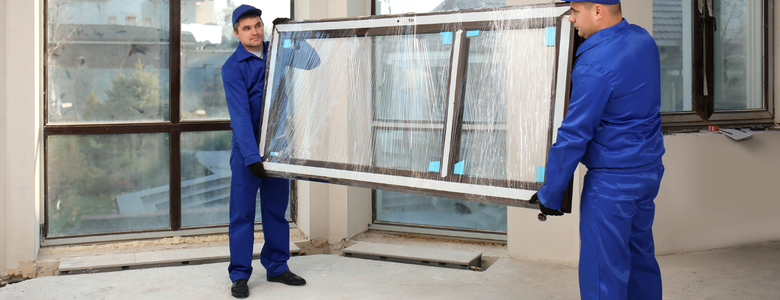
- Phase 3: installation Preparation of the site temporary weather protection will be provided to assure the building envelope is secure during removal of existing window units. Remove existing windows (with extreme caution) Remove old, leaky window units without causing damage to adjacent masonry, existing framing or interior wall finishes.
(Disposal is handled in accordance with NJ DEP regulations). Inspect, repair (if needed), and flashed rough opening. Prepare each opening for the installation of new windows including the flashing with ASTM rated weather resistant barriers.
Install and secure new commercial window units Each new unit will be installed and secured in plumb and level using manufacturer’s recommended anchor and shim systems to meet all NJ requirements.
Air and Water seal The perimeter of each installed window unit will be sealed with low expansion insulation,backer rod and commercial- grade weather resistant sealant creating a seamless air and vapor barrier. Final inspection. Each job site is inspected by the New Jersey Licensed Construction Official and will be closed per the municipality’s building permit process.
 Problems Faced By NJ on Commercial Window Installation
In the coming months, our goal will be to identify and explain the top 4 common problems and solutions when dealing with NJ commercial window repair and replacement and highlight ways Building Exterior Specialists has successfully addressed these challenges. We will feature how the following problems and solutions come into play in the varied business and structural landscapes of New Jersey, such as throughout communities as diverse as Princeton, Jersey City, Cape May, and beyond.
Problem 1: Condensation appears between glass panes.
Why this happens: An insulating glass unit (IGU) – comprised of two or more glass lites separated by a space that is filled with gas, such as argon or krypton – has a seal on the edges. If this IGU seal fails, moisture from outside the unit will work its way between the panes and cause condensation. Unfortunately, many window systems with compromised IGUs have a completely failed IGU seal where a lot of moisture has penetrated into the cavity between the panes, causing fogging, sweating or permanent marks on the interior of the lites.
Expert solution for this NJ commercial window issue: A failed IGU can’t be “repaired;” it needs to be completely replaced. The standard practice for this repair for our company when dealing with NJ commercial window systems is full replacement of the failed IGU(s) using quality certified IGU’s that incorporate warm-edge spacer technology to prevent cold to hot bridge conduction through the unit edges. Only I GMA (Insulating Glass Manufacturers Alliance) certified I GU’s are used on any NJ commercial window replacement or new construction for Building Exterior Specialists projects.
Problem 2: Air leakage around the window frame.
Why this happens: Air can escape or enter the building around the window unit in several ways. It could be through old and cracked sealant that runs around the exterior of the window unit at the intersection of the window frame and the wall. Or, sometimes, flashing is not used properly at the time of install or has failed or it could be from the originally manufactured units not being properly sealed around the perimeter of the window unit when constructed.
Expert solution for this NJ commercial window issue: To identify air leakage we often suggest Blower Door Testing of the entire commercial building. This procedure will pressurize or de-pressurize the building, creating an airflow, and we can visually and tactically detect where air is entering and escaping from the structure. Once areas are identified we will then conduct comprehensive sealing of all existing cracks around the window units using ASTM C920 compliant sealants along with back-bedding, proper backer-rod selection, and a continuous sealant bead. If we are looking to repair these issues in historic buildings that exist throughoutNJ, such as in Princeton, Burlington and Cape May, we need to coordinate tightly with preservation guidelines on both product selection and methods employed.
Problem 3: Water infiltrates under, through, or beside the window unit.
Why this happens: Often the issue is improper flashing techniques, missing sill pans, broken or worn sealant at the exterior of the unit, or even cracks in the masonry. When building a structure it is imperative to properly layer flashing membranes over the windowshead and sill during installation so that any water penetrating through the outer wall system is prevented from entering the building envelope. Poor flashing, cracked perimeter sealants or a non-existent or cracked sill pan are the primary culprits.
Expert solution for this NJ commercial window issue: We need to pull the entire window unit(s) to remove deteriorated or failed components. Proper flashing at the head and sides will be established, a newly manufactured properly sloping sill pan will be installed along with any required self-adhering flashing membrane, and backer- rod will be inserted and properly sealed all around the unit. For buildings in the “shore counties” of Ocean, Monmouth, and Cape May, or on many other areas of NJ that get the brunt of winter storm systems the need for proper water management detailed window flashing details cannot be overemphasized.
Problem 4: Excessive thermal Bridging through metal window frames.
Why this happens: Standard aluminum window frames (not specifically designed with a thermal break) can transfer a tremendous amount of heat and cold from the exterior to the interior of the building. This “thermal bridging” phenomenon can cause condensation to form along the interior face of metal window frames and even carry below to other surfaces in proximity of the frame, resulting in considerable energy loss and occupant discomfort. In addition, the high aluminum to glass area that results with standard aluminum window frames, as opposed to one with a continuous polyamide thermal break means more overall surface to the outside temperature, thus more heat/loss to gain.
Expert solution for this NJ commercial window issue: This is why Building Exterior Specialists would never consider specifying a non-thermally broken aluminum commercial window system for a project. We specify only systems with a continuous polyamide thermal break – that effectively interrupts the conductive path of the aluminum – for commercial new construction and replacements throughout New Jersey. This thermal break material reduces the thermal conductivity of the frame system up to 70% and will drastically reduce condensation and energy costs compared to conventional aluminum frames. This is a specification that should never be overlooked for quality NJ commercial window installations.
Why Should You Choose Building Exterior Specialists for Commercial Window Installation in NJ?
Not all contractors are made equal when it comes to energy efficient commercial window installation in NJ. Building Exterior Specialists offer a level of technical experience, local market knowledge and proven outcomes that separates them from general contractors that handle window work from time to time.
What Makes Building Exterior Specialists Different NJ Licensed & Insured: We are fully compliant with NJ Contractor Licensing standards and carry full general liability and workers’ compensation coverage on all jobs.
- Energy Code Specialists: The staff is well versed in the NJ Energy Sub-code amendments and is available to assist with difficult compliance issues for existing structures and historic properties.
- Manufacturer Certified Installers: Top commercial window manufacturers provide factory authorized installation credentials to verify that warranty is valid and installation practices are followed.
- Full-Service Approach: From the initial energy audit to permit closeout and post-installation testing, you have every element of the process under one roof – no coordination gaps.
- Transparent Quoting: Clear, itemized bids with no hidden fees — you’ll know what you’re paying for before the work begins.
- NJ Portfolio: Commercial Projects Completed in Bergen, Essex, Hudson, Middlesex, Morris, Monmouth, Ocean, Camden and Burlington Counties.
- Local Knowledge Local permitting processes in New Jersey cities from Hackensack to Toms River offer fewer delays and smoother projects
Energy Efficient Commercial Window Installation NJ: The Complete Guide for Building Owners
As a property owner or a commercial building manager in New Jersey, you are aware of how difficult it is to deal with your yearly expenses in terms of energy costs. Drafty and inefficient windows are the reason behind such problems as high energy bills, cold rooms, and complaints from the tenants. Energy Efficient Commercial Window Installation NJ has become not only an option but rather a necessary step towards making profit in the future. Wherever you might live in Newark, Jersey City, Trenton, Cherry Hill, or even elsewhere in the Garden State, the process of modernization of windows might completely transform your property. In the following part, we will explain to you all you need to know about commercial windows, their installation, specifications, savings, and choosing contractors.
What Is Energy Efficient Commercial Window Installation in NJ?
Energy Efficient Commercial Window Installation NJ means the process of replacing windows in commercial buildings with new windows which have high performance properties that will allow reducing energy consumption. Unlike residential windows, energy efficient commercial installations are characterized by the presence of large spans, curtain wall systems, storefront glazing, and many other building framing options of high performance and safety.
Regarding New Jersey, energy efficient commercial window installation should be performed according to the requirements stated in the NJ Energy Sub-code (IES Code) and the NJ Uniform Construction Code (UCC). Energy efficient windows for commercial properties are defined by the three coefficients: the U-factor, SHGC coefficient, and VT factor. U-factor is one of the characteristics that determines the energy efficiency of a particular window as low numbers mean good insulation.
Commercial windows are very important for the properties located in New Jersey due to the hot and humid summers and freezing winters. Such different weather conditions for coastal and inland cities like Atlantic City and Parsippany respectively should be considered while installing the windows.
Importance of Energy Efficient Window Replacement in NJ
In comparison to other states in the region, commercial properties in NJ have some of the most expensive energy costs on the East Coast. According to U.S. Energy Information Administration, commercial buildings are responsible for about 35% of total energy consumption in the state. Much of this energy is wasted because of inefficient windows. The possibility exists that windows account for 30% of a building’s heating and cooling load. Thus, you will increase the amount of money you pay for energy.
There are numerous reasons that justify the need for windows replacement for commercial buildings in New Jersey. First of all, Clean Energy Program and incentives provided by PSEG/JCP&L utility make it financially viable and profitable. Also, there is an obligatory compliance requirement for renovation works in many towns within the state. For example, towns in Bergen County, Essex County, and Middlesex County require buildings being renovated to comply with the energy code. With corporations adopting ESG principles now, it will only enhance tenant satisfaction.
Secondly, nowadays commercial tenants expect comfort and thermal efficiency in commercial buildings they rent. That is important, as hot spots in the winter season and glare in the summertime can decrease the productivity of employees.
Benefits of Energy Efficient Commercial Windows in NJ
- Economic and Operation Benefits
1.Reduction of Energy Bills: Energy efficient glazing can result in saving of 20–40% of the heating and cooling costs annually.
2.Higher Leasing Rate and Property Price: Energy-rated buildings attract more tenants; thus, they can be leased for higher rates and sold at higher prices.
3.NJ and Federal Government Incentives: Inflation Reduction Act and NJ Clean Energy Program provide tax credits and rebates for the energy efficient windows installation.
4.Decreased Maintenance Costs: As windows reduce thermal loads, they reduce the burden on HVAC systems; therefore, equipment will last longer.
5.Better Retention of Tenants: Comfortable and efficient space means higher tenant satisfaction and low vacancy rates.
- Environmental and Compliance Benefits
1.Greenhouse Gases Emissions Decrease: Lowering of energy consumption means reducing of greenhouse gas emissions.
2.Compliance with the NJ Energy Sub-code: Proper installation of high-performance windows will ensure compliance with the NJ energy code.
3.Points in LEED and ENERGY STAR Certifications: High-performance windows will earn numerous points for green building certifications.
4.Reduction of Noise: Multi-pane windows filled with gas are capable of drastically reducing urban noises – a huge advantage for office and medical buildings in NJ.
5.UV Radiation Protection: Low-E coating blocks up to 95% of UV radiation.
Ready To Lower Your NJ Business Energy Costs? Contact Building Exterior Professionals For Free Energy Audit And Window Inspection Today!
Energy Efficient Commercial Windows In NJ
1. Insulated Glass Units (IGUs)
Insulated Glass Units (IGUs) are the standard product in energy efficient windows in the commercial sector. The IGUs include two or three panes of glass separated by spacer and create an envelope filled with argon or krypton gases. Heat transmission becomes significantly reduced due to the filling with a gas, not air. Double pane IGUs are the best compromise between the value and effectiveness, while triple pane IGUs are ideal for extreme temperature change areas such as New Jersey shore or elevated inland areas.
2. Low-E (Low-Emissivity) Glass
Low-E glass includes the microscopic metallic coating that will reflect heat, but allows light to pass through. Low-E coatings are usually passive in the mixed climate area of New Jersey and allow the solar heat gain in the cold months and block it during hot months. This double effect is especially beneficial for the office building and commercial use in the areas like Hoboken, Princeton, and Edison.
3. Curtain Wall Glazing
For mid-rise and high-rise buildings, curtain wall glazing systems are the preferred option. Curtain wall glazing systems are the non-load bearing walls made of aluminum frame and big glass panels that can be installed to resist wind load, weather resistance and thermal performance at the same time. Modern curtain wall glazing systems in NJ are built to resist ASCE 7 wind load for each particular location, especially for coastal areas.
4. Storefront Window Systems
Storefront window systems are the most suitable glazing option for the ground-level commercial building such as retail establishments, restaurants and professional offices. Storefront window systems are offered with thermally broken aluminum frame that prevents cold bridging through the frame. These window systems are used extensively in NJ retail areas and strip malls of the towns like Montclair, Morristown, and Red Bank.
5. Dynamic and Smart Glass
Electrochromic and thermochromic glazing systems are the ultimate option in the commercial windows. These dynamic glazing options are able to automatically change the color of the glass according to the intensity of the sunlight and reduce the amount of solar radiation. Dynamic and smart glass are quite expensive products at the moment, but more and more commercial properties in NJ use these systems in their LEED projects.
Energy Efficient Commercial Window Performance Comparison Table
| Window Type | Initial Cost | Insulation | Heat Loss | Energy Savings | NJ Recommendation |
| Single-Pane Windows | Low | Poor | High | Low | Not Recommended |
| Double-Pane Windows | Moderate | Good | Moderate | Moderate | Good Choice |
| Triple-Pane Windows | Higher | Excellent | Low | High | Best Performance |
| Low-E Coated Windows | Moderate | Excellent | Very Low | High | Best Value |
| Gas-Filled IGUs | Higher | Superior | Very Low | Very High | Top Recommendation |
What are the steps for Energy Efficient Commercial Window Installation NJ ?
The following describes our step by step process.
- Phase 1: assessment and consultation Building Energy Audit A New Jersey specialist will perform thermal imaging and an energy audit of your current window system identifying air leaks, air infiltration rates, and thermal bridges. NJ code Review Our expert team will review applicable NJ energy subcode requirements, local zoning and codes, as well as any local HOA and municipal aesthetic guidelines.
Window Performance Specification Engineers will determine ideal U-factor, SHGC, and VT ratings for each elevation, taking into consideration the building orientation, exposure and type of occupancy.
Permit Application Building Exterior Specialists will submit applications for all required New Jersey building permits. We will file and coordinate the submission with your local Construction Code Official.
- Phase 2: design and manufacturing Custom sizing and fabrication of each window unit Commercial windows will be custom-manufactured to match all existing opening dimensions accurately. Many NJ buildings (for instance many stock buildings found in cities such as Camden, Paterson or Elizabeth) are built with unique and uncommon opening sizes.
Frame material selection The appropriate choice of thermally broken aluminum, fiberglass, or vinyl frames, depending upon specifications and performance.
Glass package assembly IGUs will be manufactured to each specification including the selection of specified glass, gas filled insulative value (argon or krypton gas), and warm-edge spacers.
- Phase 3: installation Preparation of the site temporary weather protection will be provided to assure the building envelope is secure during removal of existing window units. Remove existing windows (with extreme caution) Remove old, leaky window units without causing damage to adjacent masonry, existing framing or interior wall finishes.
(Disposal is handled in accordance with NJ DEP regulations). Inspect, repair (if needed), and flashed rough opening. Prepare each opening for the installation of new windows including the flashing with ASTM rated weather resistant barriers.
Install and secure new commercial window units Each new unit will be installed and secured in plumb and level using manufacturer’s recommended anchor and shim systems to meet all NJ requirements.
Air and Water seal The perimeter of each installed window unit will be sealed with low expansion insulation,backer rod and commercial- grade weather resistant sealant creating a seamless air and vapor barrier. Final inspection. Each job site is inspected by the New Jersey Licensed Construction Official and will be closed per the municipality’s building permit process.
Problems Faced By NJ on Commercial Window Installation
In the coming months, our goal will be to identify and explain the top 4 common problems and solutions when dealing with NJ commercial window repair and replacement and highlight ways Building Exterior Specialists has successfully addressed these challenges. We will feature how the following problems and solutions come into play in the varied business and structural landscapes of New Jersey, such as throughout communities as diverse as Princeton, Jersey City, Cape May, and beyond.
Problem 1: Condensation appears between glass panes.
Why this happens: An insulating glass unit (IGU) – comprised of two or more glass lites separated by a space that is filled with gas, such as argon or krypton – has a seal on the edges. If this IGU seal fails, moisture from outside the unit will work its way between the panes and cause condensation. Unfortunately, many window systems with compromised IGUs have a completely failed IGU seal where a lot of moisture has penetrated into the cavity between the panes, causing fogging, sweating or permanent marks on the interior of the lites.
Expert solution for this NJ commercial window issue: A failed IGU can’t be “repaired;” it needs to be completely replaced. The standard practice for this repair for our company when dealing with NJ commercial window systems is full replacement of the failed IGU(s) using quality certified IGU’s that incorporate warm-edge spacer technology to prevent cold to hot bridge conduction through the unit edges. Only I GMA (Insulating Glass Manufacturers Alliance) certified I GU’s are used on any NJ commercial window replacement or new construction for Building Exterior Specialists projects.
Problem 2: Air leakage around the window frame.
Why this happens: Air can escape or enter the building around the window unit in several ways. It could be through old and cracked sealant that runs around the exterior of the window unit at the intersection of the window frame and the wall. Or, sometimes, flashing is not used properly at the time of install or has failed or it could be from the originally manufactured units not being properly sealed around the perimeter of the window unit when constructed.
Expert solution for this NJ commercial window issue: To identify air leakage we often suggest Blower Door Testing of the entire commercial building. This procedure will pressurize or de-pressurize the building, creating an airflow, and we can visually and tactically detect where air is entering and escaping from the structure. Once areas are identified we will then conduct comprehensive sealing of all existing cracks around the window units using ASTM C920 compliant sealants along with back-bedding, proper backer-rod selection, and a continuous sealant bead. If we are looking to repair these issues in historic buildings that exist throughoutNJ, such as in Princeton, Burlington and Cape May, we need to coordinate tightly with preservation guidelines on both product selection and methods employed.
Problem 3: Water infiltrates under, through, or beside the window unit.
Why this happens: Often the issue is improper flashing techniques, missing sill pans, broken or worn sealant at the exterior of the unit, or even cracks in the masonry. When building a structure it is imperative to properly layer flashing membranes over the windowshead and sill during installation so that any water penetrating through the outer wall system is prevented from entering the building envelope. Poor flashing, cracked perimeter sealants or a non-existent or cracked sill pan are the primary culprits.
Expert solution for this NJ commercial window issue: We need to pull the entire window unit(s) to remove deteriorated or failed components. Proper flashing at the head and sides will be established, a newly manufactured properly sloping sill pan will be installed along with any required self-adhering flashing membrane, and backer- rod will be inserted and properly sealed all around the unit. For buildings in the “shore counties” of Ocean, Monmouth, and Cape May, or on many other areas of NJ that get the brunt of winter storm systems the need for proper water management detailed window flashing details cannot be overemphasized.
Problem 4: Excessive thermal Bridging through metal window frames.
Why this happens: Standard aluminum window frames (not specifically designed with a thermal break) can transfer a tremendous amount of heat and cold from the exterior to the interior of the building. This “thermal bridging” phenomenon can cause condensation to form along the interior face of metal window frames and even carry below to other surfaces in proximity of the frame, resulting in considerable energy loss and occupant discomfort. In addition, the high aluminum to glass area that results with standard aluminum window frames, as opposed to one with a continuous polyamide thermal break means more overall surface to the outside temperature, thus more heat/loss to gain.
Expert solution for this NJ commercial window issue: This is why Building Exterior Specialists would never consider specifying a non-thermally broken aluminum commercial window system for a project. We specify only systems with a continuous polyamide thermal break – that effectively interrupts the conductive path of the aluminum – for commercial new construction and replacements throughout New Jersey. This thermal break material reduces the thermal conductivity of the frame system up to 70% and will drastically reduce condensation and energy costs compared to conventional aluminum frames. This is a specification that should never be overlooked for quality NJ commercial window installations.
Why Should You Choose Building Exterior Specialists for Commercial Window Installation in NJ?
Not all contractors are made equal when it comes to energy efficient commercial window installation in NJ. Building Exterior Specialists offer a level of technical experience, local market knowledge and proven outcomes that separates them from general contractors that handle window work from time to time.
What Makes Building Exterior Specialists Different NJ Licensed & Insured: We are fully compliant with NJ Contractor Licensing standards and carry full general liability and workers’ compensation coverage on all jobs.
- Energy Code Specialists: The staff is well versed in the NJ Energy Sub-code amendments and is available to assist with difficult compliance issues for existing structures and historic properties.
- Manufacturer Certified Installers: Top commercial window manufacturers provide factory authorized installation credentials to verify that warranty is valid and installation practices are followed.
- Full-Service Approach: From the initial energy audit to permit closeout and post-installation testing, you have every element of the process under one roof – no coordination gaps.
- Transparent Quoting: Clear, itemized bids with no hidden fees — you’ll know what you’re paying for before the work begins.
- NJ Portfolio: Commercial Projects Completed in Bergen, Essex, Hudson, Middlesex, Morris, Monmouth, Ocean, Camden and Burlington Counties.
- Local Knowledge Local permitting processes in New Jersey cities from Hackensack to Toms River offer fewer delays and smoother projects