


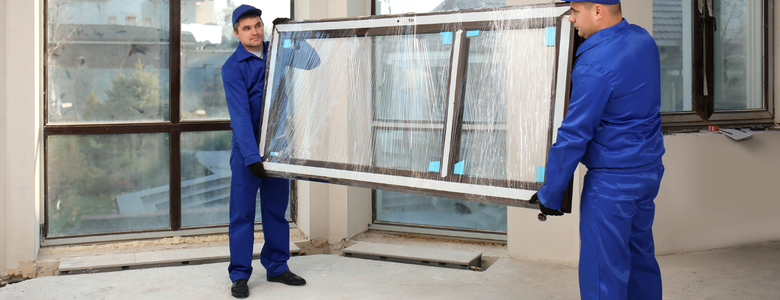

Energy Efficient Commercial Windows: A Complete Guide for Building Owners
Energy Efficient Commercial Windows: Guide for Calculating ROI for New Jersey Property Owners
Introduction
For many property owners in New Jersey, a window upgrade project is not only about aesthetics but also about building performance. Energy Efficient Commercial Windows can impact energy demand, comfort of occupants and long-term operating costs. This is why they become a part of renovation and replacement discussions. But ROI calculation requires information about several building-specific parameters such as existing condition of windows, building HVAC system, energy costs, building occupancy, local climate, window area, glazing specification and installation quality. This guide will explain what are energy efficient commercial windows, what factors determine their ROI, and help NJ property owners evaluate them without misleading claims.
What Are Energy Efficient Commercial Windows?
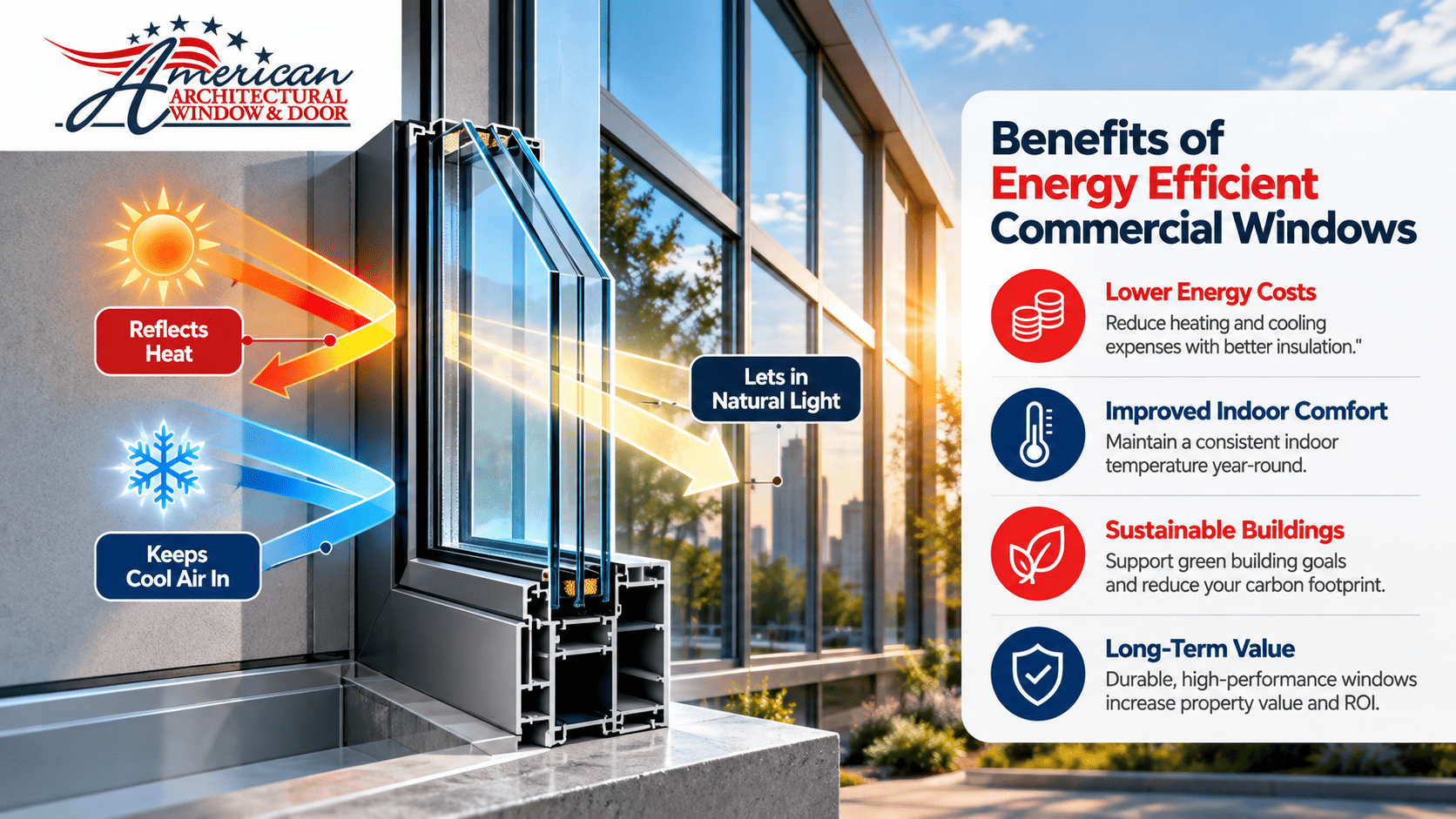
Energy Efficient Commercial Windows are window systems designed to minimize heat transfer, air leakage and solar heat gain compared to old windows while providing sufficient levels of daylight.
Some elements of energy efficiency include low-E coatings (thin coatings that minimize heat transfer while transmitting light), insulating glass units, glazings of multiple layers filled with inert gases (e.g., argon), thermally improved frames (including thermal breaks for aluminum frames), proper air and water tightness as well as flashing and glazing tuned according to solar exposure.
The performance is characterized by several metrics including U-factor (heat transfer), SHGC (solar heat gain), visible transmittance (transmitted light) and air leakage. None of these values alone does say anything about the performance which lies in a combination of all mentioned elements.
Why Energy Efficiency Is Important for NJ Commercial Properties
The cold winters, humid summers and seasonal changes of temperature impact the heating and cooling demand of New Jersey properties. Poorly sealed, drafty or deteriorated windows are quite common and can cause higher energy demand, heating and cooling costs, discomfort of occupants, drafts, condensation and other problems related to the poor performance.
How Do Energy Efficient Commercial Windows Improve ROI?
ROI is achieved with direct and indirect financial and operational benefits while comparing only the purchase price of windows won’t yield any results.
The direct benefits of energy efficient windows can include reduced heating and cooling costs, reduced HVAC load due to lower air leakage, and increased lifespan compared to deteriorated windows. The indirect benefits may include improved occupant comfort, improved experience of tenants, reduced frequency of repairs (failed seals, sticking hardware, water infiltration) and contribution towards sustainability goals. Direct benefits appear on the energy bill; indirect ones are operationally important but more difficult to quantify and both of them should be considered separately.
Energy Efficient vs. Standard Commercial Windows
Factor
Standard/Older Windows
Energy-Efficient Windows
Thermal performance
Often higher heat transfer, especially single-pane
Generally lower, with insulated glazing and thermal breaks
Air leakage
Increases as seals degrade
Tighter tolerances when properly installed
Solar control
Limited management
Coatings tuned to orientation and climate
Occupant comfort
More prone to drafts
More consistent surface temperatures
Maintenance
More frequent repair over time
Routine maintenance, not maintenance-free
Upfront investment
Lower if simply repaired
Higher upfront, offset by potential operational benefits
The condition of older windows may be relatively good despite their age.
 What Factors Impact Commercial Window ROI?
- The condition of existing windows – the worse it is, the more opportunities for improvements
- Building size and window area – the bigger window-to-wall ratio is, the more impact the replacement will have
- Glass and glazing specification – Low-E coating, gas fills, and glazing layers according to orientation and climate
- Frame material – thermal breaks impact heat transfer through the window frame
- Building orientation – more solar gain at the south-west façade
- HVAC system – a well-maintained HVAC system will respond differently than an old one
- Local energy costs – affect how quickly the savings will be translated into dollars
- Occupancy pattern – the properties that operate continuously will have different performance than those who don’t
- Installation quality – sealing, flashing and alignment impact real-life performance
- Scope of the project – standalone window replacement or envelope/HVAC upgrade bundle
It is impossible to calculate ROI based on the price of windows because of the large amount of interacting factors.
Understanding U-Factor, SHGC and Other Metrics
U-factor, SHGC, visible transmittance and air leakage are the metrics of window performance – take all of them into account, not one of them.
The U-factor measures the heat transfer (the lower is, the better); SHGC is a measure of solar heat gain through windows (the lower is, the less gain). The visible transmittance is a measure of light transmission, influencing the daylight. The air leakage is a measure of air leakage under certain test conditions. These metrics are standardized and provided by the National Fenestration Rating Council (NFRC) which allows to compare products.
A window with excellent U-factor but improperly matched SHGC for the south façade can perform badly in it.
How Low-E Glass Impacts Performance of Commercial Buildings
Low-E glass is a thin, practically invisible coating that minimizes radiant heat transfer through the window while maintaining the visible light transmission.
There are several Low-E coatings that differ according to the season in which they provide the best performance – some of them minimize the summer gain while others maximize the winter gain. There is no universal optimum specification; the best one is chosen according to the climate, building orientation and use. For example, west storefront and north façade may require different Low-E glass in the same building.
Do Energy Efficient Commercial Windows Pay for Themselves?
It is impossible to provide a fixed payback period of commercial windows as it depends on many project-specific factors such as existing condition, energy use of a building, energy costs, window area, orientation, glass and frame specification, installation quality, project cost, occupancy and HVAC system impact. So this article will not provide a fixed period of payback – professional energy modeling will be more appropriate for the larger projects.
Upfront Costs vs. Long-Term Value
The lowest cost does not guarantee the lowest long-term value. The total value depends on material cost, engineering and design, fabrication, installation, maintenance and durability, service demands, timing of replacement and building disruption. The cheap solution that neglects flashing or utilizes inferior glazing specification can lead to callbacks, increased energy costs and premature failures.
Energy Efficient Windows for Different NJ Property Types
- Office buildings – balancing the daylight with solar heat gain control, especially south-west façade
- Multifamily/apartments – a large number of apartments raises the question about residents’ comfort and phased installation
- Retail – large areas of storefront glass increase the impact of glazing choice
- Institutional buildings – occupant schedule and building codes affect the performance goals
- Renovated or older buildings – non-standard openings require custom fabrication for a proper fit
Replacement vs. Repair: What Option Provides Better ROI?
The choices include repair (hardware and minor seals replacement), glazing and components replacement, entire window replacement or envelope upgrades. The best choice will depend on the existing condition and long-term goals – not every building requires full window replacement and not every problem is solved by window repair. A professional condition assessment is the first step to determine the best choice.
How Custom Commercial Window Fabrication Affects ROI
Custom fabrication becomes relevant if openings are non-standard, the older buildings have non-standard dimensions, replacement should match the existing condition or historical and adaptive reuse projects require special solution. The process includes additional steps including planning, engineering and fabrication and affects the timeline and cost of the project. Exact values vary too much to make the general estimate and should be determined for each project. Still, it might be the only option to get a proper fit in case of non-standard openings.
Why Installation Quality Is as Important as Windows Specification
A high-performance window can underperform if installed improperly. Quality installation requires precise field measurement, proper preparation of the opening, proper flashing and sealing, correct alignment, proper glazing installation and coordination of design, fabrication and installation processes. A well-specified window installed improperly rarely performs as it was designed.
How AAWD Inc. Approaches Commercial Window Projects
American Architectural Window & Door Inc. (AAWD) serves the Tri-State area (New Jersey) since 1994. AAWD specializes in design, engineering, selection, custom fabrication, installation and project management of commercial, multifamily, renovation and occupied buildings’ windows. As the ROI depends on the building specifics, the AAWD’s approach to the window projects begins with building evaluation instead of standardization of windows specification.
How to Calculate Potential ROI
A simplified formula: Estimated ROI = (Financial Benefits − Project Cost) ÷ Project Cost × 100
However, a real calculation should consider annual energy savings, maintenance savings, cost of financing, the lifespan of the new system, the replacement cycle avoidance, expected change in energy prices and other benefits such as occupant comfort. Energy modeling is more appropriate than generic calculation for the larger projects.
Commercial Window ROI Checklist for NJ Property Owners
- Review the condition of existing windows and energy bills
- Identify comfort complaints and drafts
- Analyze HVAC system performance and total window area
- Identify type/age of glazing and condition of frames
- Consider building orientation and occupancy patterns
- Establish project goals before getting proposals
- Compare window proposals like-for-like, not based on price
- Get detailed and itemized proposals
- Analyze the approach to installation and long-term maintenance
- Calculate total project value, not only upfront cost
Mistakes to Avoid
Choosing based on the upfront cost; focusing only on glazing, not the frame performance; ignoring installation quality; using generic specification irrespective of the building specifics; ignoring orientation or existing conditions; assuming that every building requires the same windows; expecting guaranteed ROI without building evaluation; underestimating occupant disruption; considering windows as the isolated element of building envelope.
Frequently Asked Questions About Energy Efficient Commercial Windows
What are energy efficient commercial windows?
Window systems that minimize heat transfer, air leakage and solar heat gain compared to older windows via Low-E coatings, insulated glazing and thermally improved frames.
Are they worth the investment?
It depends on the building – the older building with deteriorated windows and high energy consumption is more likely to benefit than a newer one.
How much can they save?
The savings may vary depending on building, climate and energy costs too much to provide a general figure – the building-specific evaluation will provide more accurate results.
When do they pay for themselves?
There is no fixed payback period that can be applied to every project; it depends on project cost, savings, energy costs and building use.
What is Low-E glass?
Thin, virtually invisible coating that reduces heat transfer while transmitting visible light.
What is the good U-factor?
There are targets for every climate zone and building type, not one universal number – NFRC labeling allows to compare different products directly.
What is SHGC?
Solar Heat Gain Coefficient is a metric of how much solar heat passes through the window as heat; the lower value is, the less gain occurs but it isn’t the optimal for every orientation.
Are they suitable for older buildings?
Yes but non-standard openings require custom fabrication for proper fit.
Repair or replacement – which is better?
It depends on existing condition and goals – minor problems may be fixed by repair but seriously deteriorated windows may be replaced.
How can NJ owners evaluate ROI?
Analyze the existing conditions, energy bills, orientation, occupancy and compare detailed proposals like-for-like – with professional design and engineering team for larger projects.
Energy Efficient Commercial Windows: Guide for Calculating ROI for New Jersey Property Owners
Introduction
For many property owners in New Jersey, a window upgrade project is not only about aesthetics but also about building performance. Energy Efficient Commercial Windows can impact energy demand, comfort of occupants and long-term operating costs. This is why they become a part of renovation and replacement discussions. But ROI calculation requires information about several building-specific parameters such as existing condition of windows, building HVAC system, energy costs, building occupancy, local climate, window area, glazing specification and installation quality. This guide will explain what are energy efficient commercial windows, what factors determine their ROI, and help NJ property owners evaluate them without misleading claims.
What Are Energy Efficient Commercial Windows?
Energy Efficient Commercial Windows are window systems designed to minimize heat transfer, air leakage and solar heat gain compared to old windows while providing sufficient levels of daylight.
Some elements of energy efficiency include low-E coatings (thin coatings that minimize heat transfer while transmitting light), insulating glass units, glazings of multiple layers filled with inert gases (e.g., argon), thermally improved frames (including thermal breaks for aluminum frames), proper air and water tightness as well as flashing and glazing tuned according to solar exposure.
The performance is characterized by several metrics including U-factor (heat transfer), SHGC (solar heat gain), visible transmittance (transmitted light) and air leakage. None of these values alone does say anything about the performance which lies in a combination of all mentioned elements.
Why Energy Efficiency Is Important for NJ Commercial Properties
The cold winters, humid summers and seasonal changes of temperature impact the heating and cooling demand of New Jersey properties. Poorly sealed, drafty or deteriorated windows are quite common and can cause higher energy demand, heating and cooling costs, discomfort of occupants, drafts, condensation and other problems related to the poor performance.
How Do Energy Efficient Commercial Windows Improve ROI?
ROI is achieved with direct and indirect financial and operational benefits while comparing only the purchase price of windows won’t yield any results.
The direct benefits of energy efficient windows can include reduced heating and cooling costs, reduced HVAC load due to lower air leakage, and increased lifespan compared to deteriorated windows. The indirect benefits may include improved occupant comfort, improved experience of tenants, reduced frequency of repairs (failed seals, sticking hardware, water infiltration) and contribution towards sustainability goals. Direct benefits appear on the energy bill; indirect ones are operationally important but more difficult to quantify and both of them should be considered separately.
Energy Efficient vs. Standard Commercial Windows
| Factor | Standard/Older Windows | Energy-Efficient Windows |
| Thermal performance | Often higher heat transfer, especially single-pane | Generally lower, with insulated glazing and thermal breaks |
| Air leakage | Increases as seals degrade | Tighter tolerances when properly installed |
| Solar control | Limited management | Coatings tuned to orientation and climate |
| Occupant comfort | More prone to drafts | More consistent surface temperatures |
| Maintenance | More frequent repair over time | Routine maintenance, not maintenance-free |
| Upfront investment | Lower if simply repaired | Higher upfront, offset by potential operational benefits |
The condition of older windows may be relatively good despite their age.
What Factors Impact Commercial Window ROI?
- The condition of existing windows – the worse it is, the more opportunities for improvements
- Building size and window area – the bigger window-to-wall ratio is, the more impact the replacement will have
- Glass and glazing specification – Low-E coating, gas fills, and glazing layers according to orientation and climate
- Frame material – thermal breaks impact heat transfer through the window frame
- Building orientation – more solar gain at the south-west façade
- HVAC system – a well-maintained HVAC system will respond differently than an old one
- Local energy costs – affect how quickly the savings will be translated into dollars
- Occupancy pattern – the properties that operate continuously will have different performance than those who don’t
- Installation quality – sealing, flashing and alignment impact real-life performance
- Scope of the project – standalone window replacement or envelope/HVAC upgrade bundle
It is impossible to calculate ROI based on the price of windows because of the large amount of interacting factors.
Understanding U-Factor, SHGC and Other Metrics
U-factor, SHGC, visible transmittance and air leakage are the metrics of window performance – take all of them into account, not one of them.
The U-factor measures the heat transfer (the lower is, the better); SHGC is a measure of solar heat gain through windows (the lower is, the less gain). The visible transmittance is a measure of light transmission, influencing the daylight. The air leakage is a measure of air leakage under certain test conditions. These metrics are standardized and provided by the National Fenestration Rating Council (NFRC) which allows to compare products.
A window with excellent U-factor but improperly matched SHGC for the south façade can perform badly in it.
How Low-E Glass Impacts Performance of Commercial Buildings
Low-E glass is a thin, practically invisible coating that minimizes radiant heat transfer through the window while maintaining the visible light transmission.
There are several Low-E coatings that differ according to the season in which they provide the best performance – some of them minimize the summer gain while others maximize the winter gain. There is no universal optimum specification; the best one is chosen according to the climate, building orientation and use. For example, west storefront and north façade may require different Low-E glass in the same building.
Do Energy Efficient Commercial Windows Pay for Themselves?
It is impossible to provide a fixed payback period of commercial windows as it depends on many project-specific factors such as existing condition, energy use of a building, energy costs, window area, orientation, glass and frame specification, installation quality, project cost, occupancy and HVAC system impact. So this article will not provide a fixed period of payback – professional energy modeling will be more appropriate for the larger projects.
Upfront Costs vs. Long-Term Value
The lowest cost does not guarantee the lowest long-term value. The total value depends on material cost, engineering and design, fabrication, installation, maintenance and durability, service demands, timing of replacement and building disruption. The cheap solution that neglects flashing or utilizes inferior glazing specification can lead to callbacks, increased energy costs and premature failures.
Energy Efficient Windows for Different NJ Property Types
- Office buildings – balancing the daylight with solar heat gain control, especially south-west façade
- Multifamily/apartments – a large number of apartments raises the question about residents’ comfort and phased installation
- Retail – large areas of storefront glass increase the impact of glazing choice
- Institutional buildings – occupant schedule and building codes affect the performance goals
- Renovated or older buildings – non-standard openings require custom fabrication for a proper fit
Replacement vs. Repair: What Option Provides Better ROI?
The choices include repair (hardware and minor seals replacement), glazing and components replacement, entire window replacement or envelope upgrades. The best choice will depend on the existing condition and long-term goals – not every building requires full window replacement and not every problem is solved by window repair. A professional condition assessment is the first step to determine the best choice.
How Custom Commercial Window Fabrication Affects ROI
Custom fabrication becomes relevant if openings are non-standard, the older buildings have non-standard dimensions, replacement should match the existing condition or historical and adaptive reuse projects require special solution. The process includes additional steps including planning, engineering and fabrication and affects the timeline and cost of the project. Exact values vary too much to make the general estimate and should be determined for each project. Still, it might be the only option to get a proper fit in case of non-standard openings.
Why Installation Quality Is as Important as Windows Specification
A high-performance window can underperform if installed improperly. Quality installation requires precise field measurement, proper preparation of the opening, proper flashing and sealing, correct alignment, proper glazing installation and coordination of design, fabrication and installation processes. A well-specified window installed improperly rarely performs as it was designed.
How AAWD Inc. Approaches Commercial Window Projects
American Architectural Window & Door Inc. (AAWD) serves the Tri-State area (New Jersey) since 1994. AAWD specializes in design, engineering, selection, custom fabrication, installation and project management of commercial, multifamily, renovation and occupied buildings’ windows. As the ROI depends on the building specifics, the AAWD’s approach to the window projects begins with building evaluation instead of standardization of windows specification.
How to Calculate Potential ROI
A simplified formula: Estimated ROI = (Financial Benefits − Project Cost) ÷ Project Cost × 100
However, a real calculation should consider annual energy savings, maintenance savings, cost of financing, the lifespan of the new system, the replacement cycle avoidance, expected change in energy prices and other benefits such as occupant comfort. Energy modeling is more appropriate than generic calculation for the larger projects.
Commercial Window ROI Checklist for NJ Property Owners
- Review the condition of existing windows and energy bills
- Identify comfort complaints and drafts
- Analyze HVAC system performance and total window area
- Identify type/age of glazing and condition of frames
- Consider building orientation and occupancy patterns
- Establish project goals before getting proposals
- Compare window proposals like-for-like, not based on price
- Get detailed and itemized proposals
- Analyze the approach to installation and long-term maintenance
- Calculate total project value, not only upfront cost
Mistakes to Avoid
Choosing based on the upfront cost; focusing only on glazing, not the frame performance; ignoring installation quality; using generic specification irrespective of the building specifics; ignoring orientation or existing conditions; assuming that every building requires the same windows; expecting guaranteed ROI without building evaluation; underestimating occupant disruption; considering windows as the isolated element of building envelope.
Frequently Asked Questions About Energy Efficient Commercial Windows
What are energy efficient commercial windows?
Window systems that minimize heat transfer, air leakage and solar heat gain compared to older windows via Low-E coatings, insulated glazing and thermally improved frames.
Are they worth the investment?
It depends on the building – the older building with deteriorated windows and high energy consumption is more likely to benefit than a newer one.
How much can they save?
The savings may vary depending on building, climate and energy costs too much to provide a general figure – the building-specific evaluation will provide more accurate results.
When do they pay for themselves?
There is no fixed payback period that can be applied to every project; it depends on project cost, savings, energy costs and building use.
What is Low-E glass?
Thin, virtually invisible coating that reduces heat transfer while transmitting visible light.
What is the good U-factor?
There are targets for every climate zone and building type, not one universal number – NFRC labeling allows to compare different products directly.
What is SHGC?
Solar Heat Gain Coefficient is a metric of how much solar heat passes through the window as heat; the lower value is, the less gain occurs but it isn’t the optimal for every orientation.
Are they suitable for older buildings?
Yes but non-standard openings require custom fabrication for proper fit.
Repair or replacement – which is better?
It depends on existing condition and goals – minor problems may be fixed by repair but seriously deteriorated windows may be replaced.
How can NJ owners evaluate ROI?
Analyze the existing conditions, energy bills, orientation, occupancy and compare detailed proposals like-for-like – with professional design and engineering team for larger projects.